Written by Theo Venter and Ken Roberts
As a Manager, would you be alarmed if you discovered no one truly believes in your safety system? Most Team Leaders wouldn’t be. And the workforce certainly not. We say “no one” because we interact with industry daily and we have never met anyone who can put their hand on their heart and honestly say they believe wholeheartedly 100% in their safety program. No one!
To us this is staggering and the reason why we called our book “Get Real”.
Whenever we discuss the subject of safety buy-in, we always end up talking about trust and congruency. But nobody wants to go there. It’s like we are talking dirty. Sometimes in a seminar or speaking engagement, we’ll ask Executives the following question:
“Can you put your hand on your heart with absolute conviction and confidently say that your average worker believes and trusts in your safety system 100%. To the degree that someone wouldn’t take off their insulated gloves like Theo Venter did?”
No one has put up their hand yet.
The lack of belief in our safety systems, or the lack of truthful discussion, is probably the biggest problem facing our industry today. If we are not REAL about our disbelief in the catchphrase ‘safety before production’; if we are not REAL about our disdain of Take 5 pre-task observation checklists, or how demoralising post incident safety investigations are, will a workforce “speak up” like you want them too? If we are not REAL about unspoken or secret values—even though we know they exist, are we disingenuous when we say ‘all accidents are preventable’? We might be better off saying ‘all accidents are regrettable’. The point we are making is this. All conversations are legitimate. Not just the ones that tow the company line. In fact, free speech will reveal hidden dangers alongside any perceived disenchantments. What’s more important however? Exposing dangerous work practices or maintaining rhetorical parlance. It’s when no one is willing to challenge the status quo that you should be concerned. We are!
Seemingly obvious contradictions swept under the carpet like some shady family secret, will come back to haunt you like all dark pasts do. Usually in the form of an incident or accident as a result of an unspoken cultural impingement, or short cuts that became a habit because they saved time or money.
Outwardly, open opinions can scare some company leaders. What if workers don’t believe in Zero Harm? Some companies see this as blasphemy. But what if we were allowed to have our opinions and it actually resulted in greater safety?
Well, it does!
When did Theo really have his accident? Was it when he touched the electricity? Or was it the moment he put his hands between his knees—and withdrew them from his insulated gloves? Was it when he saw a colleague remove his insulated gloves a few days earlier, and Theo decided not to raise it at the pre-shift briefing or the safety meeting? Was it years of cultural impingements that gradually became normally accepted practices? What do we believe is the REAL cause of Theo’s accident? Was it personal, cultural… or both!
Well, before we can answer that question, we need to understand what creates beliefs in the first place. What is real? Is it what your eyes see or are your ‘photoreceptors’ simply gathering reflected light? Is it what your ears hear or do they simply receive encoded sine-wave vibrations? Frankly, what we discern is simply our brain attaching meaning to our senses. Otherwise they really are just sensory receptions sent to the brain—without judgement or opinion.
Humans seem to believe in things when everyone else believes in them too. Until then however, it is quite possible that nothing is real, in terms of human cognition anyway. What if the herd believed in honesty and accountability, over and above conformity and compliance? What if we could un-taint our current beliefs and implant new ones? So that the herd believed in a new way of looking at safety. Except, for that to happen we would need to let go of our long-held beliefs. Sometimes called habits.
It’s our Emotional brain (limbic system) that attaches meaning to our senses that create perceptions, and stores them in our Habitual brains for a rainy day. Beliefs are in fact—simply a form of habit. Stored away and reactivated upon certain cues. Always lurking, waiting for the right moment to respond and emerge when you least expect it. Therefore the question is not: “What should we believe”, but “How can we adopt the kind of habits that create a safe workplace?
That’s easy!
In October 1987, Paul O’Neill gave his first speech as CEO of the aluminium manufacturing giant, Alcoa. “I intend to make Alcoa the safest company in America,” he said.[1] In ’87 Alcoa was a basket case financially, and no one was talking about safety. Certainly not at a company general meeting. Investors thought a lunatic had taken the helm. All anyone was talking about in ’87 was raising profits.
Yet, when O’Neill retired thirteen years later, Alcoa’s annual net profit was five times higher than when he started. Alcoa had become the richest company on earth—and the SAFEST!
We don’t recall this analogy because it is about safety. The moral of this story is how to find a program that aligns everyone’s vision and direction, which allows a workforce to believe and buy into one common goal and idea. What was O’Neills secret? In a word, “Disruption”.
“I knew I had to transform Alcoa, but you can’t order people to change. So I decided I was going to start focusing on one thing that would spread throughout the entire company. By changing one single keystone habit.” —Paul O’Neill
So that’s it, right? We just focus on safety. Except… we already do!
The challenge for today’s workplaces is that everyone focuses on safety now. And quite frankly, if you ask around, it’s become a little boring. Just ask any worker who’s willing to tell you the truth. It’s far from new or “disrupting” like it was in ‘87. Back then, thousands of CEO’s jumped onto O’Neill’s safety bandwagon. So much so, that we still have the remnants throughout our industry today. Zero Harm being one of them. But you can’t flog a dead horse.
So what is a new disruption, something groundbreaking like O’Neill’s. Something that focuses on changing one industry keystone habit that will affect all other habits.
It’s accountability!
That is, being open and honest with your workforce. To the degree that they trust you and will openly disclose workplace habits that are seemingly not congruent with your desired safety values. In a sense, you need to be open and honest so that they will be the same with you. Which means you may have to come clean yourself. Instead of regurgitating company rhetoric, which doesn’t cultivate much inspiration, you could reveal what you really think of over-regulation. Or your frustration at having to enforce compliance on things that are more about avoiding penalties, than creating safety. Yes, you know you feel that way sometimes. And your work crew know you do too.
Your newfound candidacy will make enormous inroads towards creating trust. It doesn’t mean being disrespectful. It isn’t sarcasm or mockery. Being REAL means empowered reflection and contemplation. It equates to reviewing current practices through the prism of continuous improvement. It means openly discussing your workplace disenchantments as an avenue to renewed camaraderie and buy-in. Perceived regulatory constraints may in fact be a gateway to problem solving and self-regulation.
If you can transform this one routine, this one keystone habit—openness and disclosure—so it spreads throughout your entire company or even your entire industry, would that be more life-affirming and uplifting than enforcement, compliance and regulation? Would we then have a better chance of bringing questionable work tasks and dubious practices out in the open, like taking off your insulated gloves to access a tricky 12mm Nut? When we ask people to speak up about safety, do we really expect they will in our current climate? Where penalties and discipline carry more weight than ownership and autonomy.
Habits that promote openness and disclosure, trust, ownership, personal responsibility, voluntary operational discipline and dare we say it… more accountability… would have prevented Theo’s accident. If his workplace had the inspiration and inclination to openly discuss their dis-beliefs and dis-enchantments in the system, would it have encouraged them to raise unsafe habits and secret values? One’s that reveal convenience-seeking and/or proclivities that take shortcuts.
We guarantee if you try O’Neill’s little gem, implementing one keystone habit, one keystone value that places ownership and accountability above all other values, it will create such enormous gains and you’ll never look back. Imagine if your targeted “disruption” was workforce affirming and empowering.
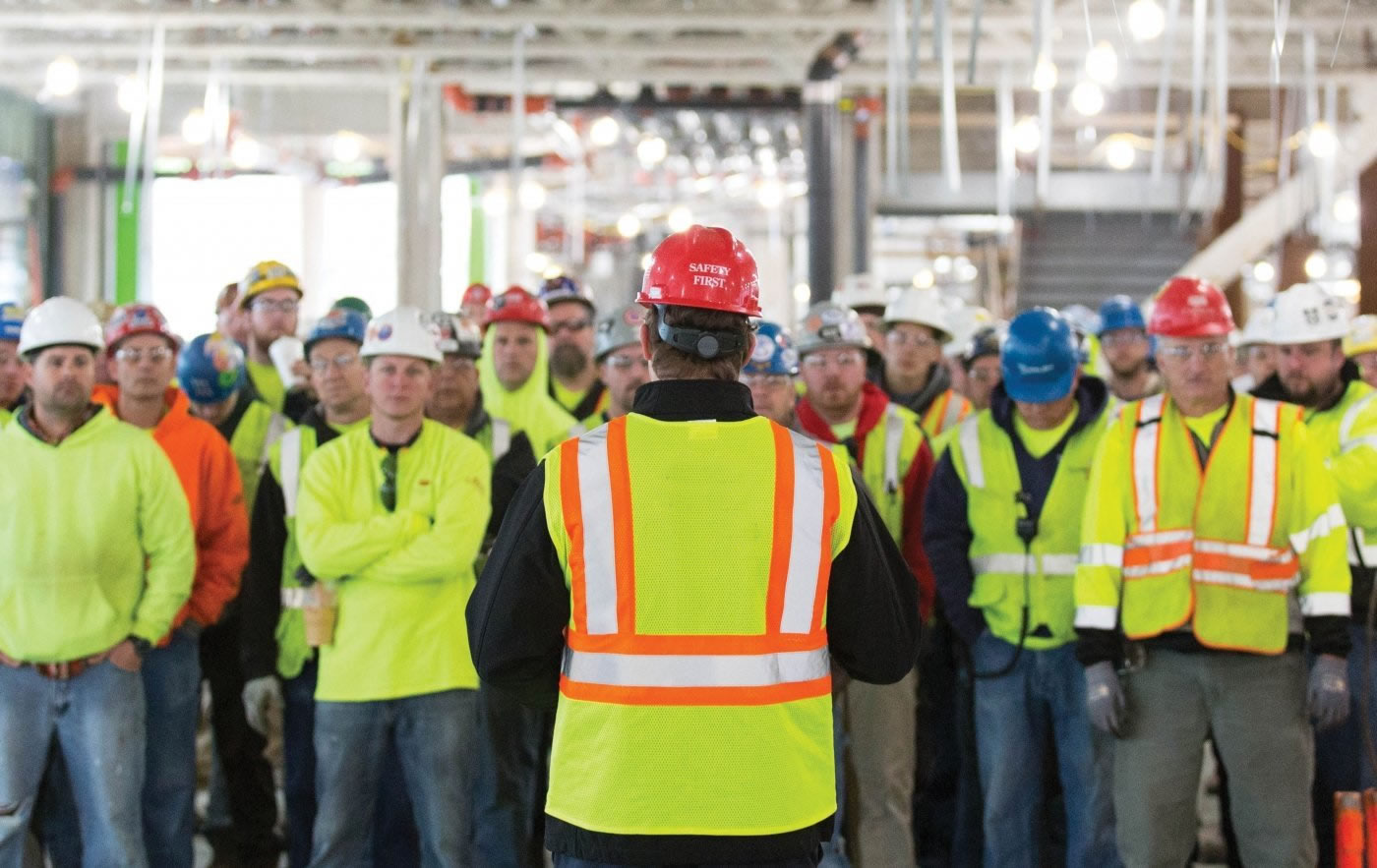
We are convinced this next new disruption should take place at the pre-shift briefing. Because everyone takes the pre-shift briefing for granted these days. Over the last twenty years it’s hardly changed in format. Thousands of sites across the globe will have someone start the day with, “OK, let’s be safe today?”
What if instead they added, “OK, what’s our reason for being here today, what’s our ‘Why’? How’s the safety-mission looking? Are we on track? What about our agreements, all good? Who needs more support around their accountabilities?”
How might this emphasis on support and accountability, rather than the banal “don’t get hurt” message, change your workforce’s intention and dramatically shift their focus and mindset to taking total personal responsibility and ownership? Why don’t you try it and see? We did and the results are amazing.
Until next time, please take care out there…
Theo and Ken